

High Times
The Grey Lady gets wise

Hei from Finland! Congrats to the Seattle Seahawks (the Lombardi Trophy), Breezy Johnson (gold medal, engagement ring), and the dancing stovetop espresso makers (hearts around the world) on all of their big wins this week. If it’s Perjantai, it’s an international version of Family Matters:
Sunday Mornin’ Comin’ Down: The backlash to social libertarianism beckons
‘Super Mom’ on Skates: Italy celebrates with Francesca Lollobrigida
The Company Line: New policy resource
It’s Me, Hi: Conservative Crossroads, Public Discourse, ACF public comment
Parting Shots
Sunday Mornin’ Comin’ Down
So long as you are unable to legally drive a car, you have lived in a world in which no state legally sanctioned personal, non-medical use of cannabis. Fourteen years after the first states, Colorado and Washington, legalized weed at the ballot box, almost half of states now allow recreational marijuana use (a special shoutout to Idaho, Wyoming, Kansas, Nebraska, and both Carolinas for holding the line). As Family Matters readers will recall, a new change in Washington will soon make cannabis even easier to sell and market.
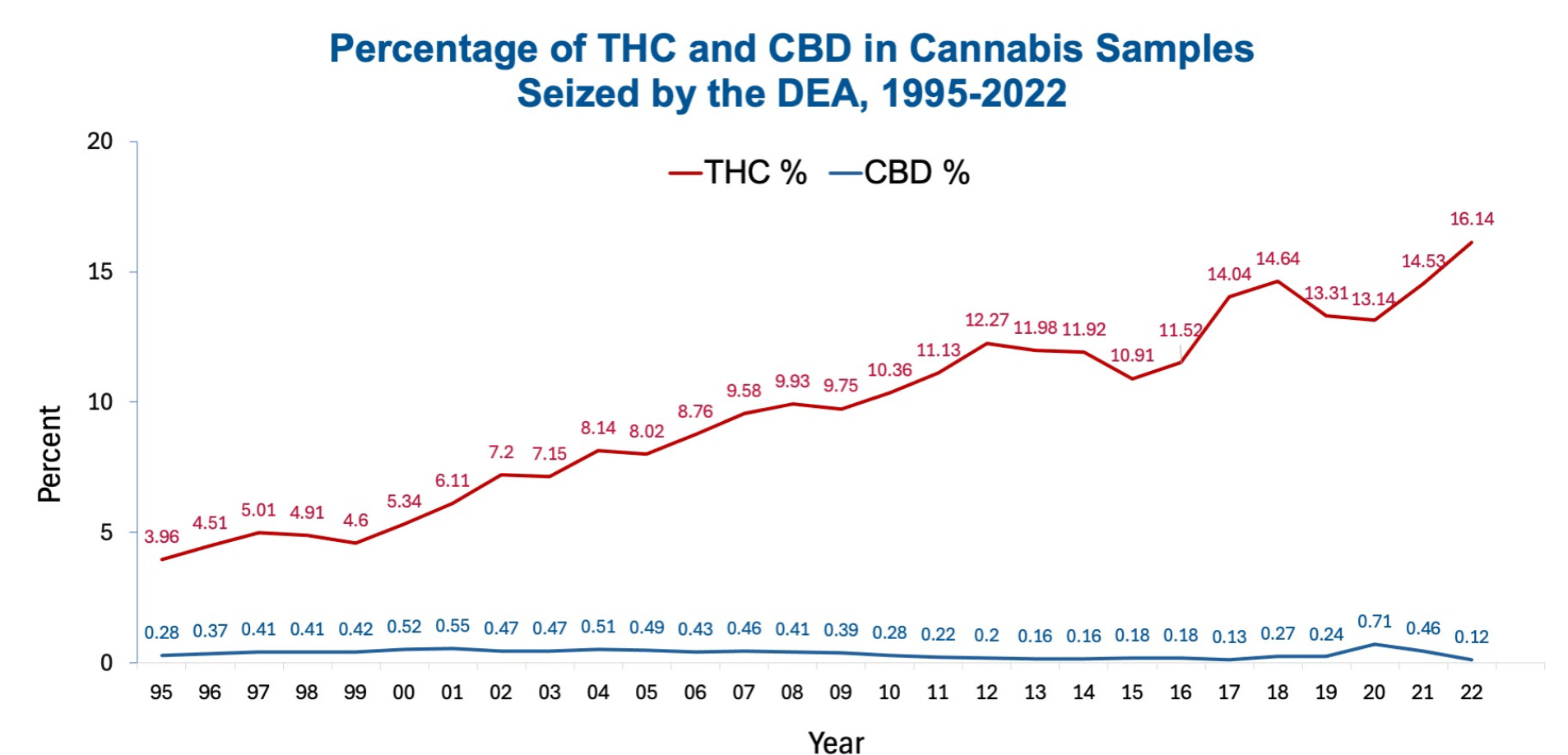
Many, perhaps even most, people who try weed can manage to keep their usage from spiraling into addiction or dependency. Yet many cannot, and their numbers keep rising. It’s not just due to more people trying marijuana, either, but the increased potency of the drug — the National Institute on Drug Abuse has found that the average level of the major psychotropic chemical (THC) found in cannabis has quadrupled in just the last three decades, to say nothing of the more mellow version sold at Grateful Dead concerts in the 1970s.
Now, none other than the New York Times editorial page — the in-house organ of conventional wisdom for many on the center-left — has weighed in with its own notes of regret, pointing out that the promises of drug access liberalizers have failed to pan out and the social costs have been higher than predicted. It appeared in Tuesday’s print edition with a declarative headline: “The U.S. Has a Marijuana Problem.”1 It’s high time for such a re-evaluation.

Part of the reason for the Times’ shift has to be because they can see the data as well as we can. The public health concerns lie not in the average user’s individual experience. It’s the cumulative impact of a cultural shift towards more marijuana use on both the intensive and extensive margin (that is, both more frequent use and more potent products being used). The overall effects of America’s plunge into reefer madness are showing up on job sites and emergency rooms. In the decade following recreational legalization, positive tests for the drug following on-the-job accidents tripled, according to the Wall Street Journal. One in five lifetime users show some sign of cannabis use disorder. For young people – the people who are most likely to consume, and overconsume, it – marijuana is associated with lower levels of education, lower earnings, and less marriage and family life.
A culture of widespread marijuana availability is one that makes young men, in particular, more inclined to be socially disengaged — you don’t have to be a conservative to find that concerning. As Kevin A. Sabet, president of Smart Approaches to Marijuana, wrote for Unherd, “The paper’s newly cautious posture — even as it continues to support legalisation with regulation — should be read as a bellwether…[giving] cover to those who have long harboured these concerns but hesitated to voice them.”
In its editorial, the Times writes:
“[T]here is a lot of space between heavy-handed criminal prohibition and hands-off commercial legalization. Much as the United States previously went too far in banning pot, it has recently gone too far in accepting and even promoting its use...The larger point is that a society should be willing to examine the real-world impact of any major policy change and consider additional changes in response to new facts. In the case of marijuana, the recent evidence offers reason for Americans to become more grudging about accepting its use.”
It’s genuinely a breath of fresh air (the kind too often hard to find in today’s weed smoke-enveloped downtowns) to have the New York Times channelling the late drug policy researcher Mark Kleiman, whose policy of “grudging toleration” was criticized by social conservatives as giving away too much and by social libertarians as being too willing to justify repressive policy actions.
The libertarians have won for the past decade-and-a-half, and the public policy outcomes have been increasingly clear — we do not live in a utopia of consenting adults just taking the edge off after a long day at the office. Rather, that cohort of adults, and they are real, exist alongside a share of the population who cannot handle drug liberalization responsibly, with the attendant health problems, mental health breaks, “floridly psychotic two-year-olds,” and other excesses of our rapid entry into a world of light (if any) regulation. Missouri Attorney General Catherine Hanaway recently tweeted out a vivid example of how vendors are intentionally branding their THC-laced products with colorful (and trademark-infringing) packaging designed to appeal to teens and young adults.


It’s a far cry from the “safe, legal, and rare” approach to marijuana legalization many liberals — including the editorial board of the Times — thought they were signing up for. But in the same way that many of our best and brightest minds are helping sports books develop ever more chicanery to attract new customers and weed out the ones who are actually able to win, America’s political and legal culture has a hard time delineating “legal” and “socially deleterious, but legal.” As the Times editorial board writes, “Supporters of marijuana legalization often called for a strategy of ‘legalize and regulate.’ It is a smart approach. Unfortunately, the country has pursued the first part of it while largely ignoring the second.”
They call for a federal tax on marijuana (“on the scale of dollars per joint, not cents”), an upper limit on potency, and a crackdown on false claims around medical marijuana’s efficacy, recognizing the need to mitigate the harm around our recent experiment in drug liberalization. In so doing, the Times editorial board is sounding notes like the other “neo-neo-conservatives” I profiled in a recent article for The Dispatch. Like the neo-conservatives of the 1970s, they are reacting to the excesses of the left, recognizing that public policy can play a constructive role in intermediating the relationship between the individual and the market, rather than just limiting the terms of economic coercion.
Cynics may argue the Times’ stance is less a product of careful assessment than negative partisanship — if the Trump White House is rescheduling marijuana today, some may wonder, is there any question that liberals would suddenly find reason to oppose it. But what else are we supposed to notice when the Times editorial board now sounds more cautionary notes around the commercialization of weed than some of the louder populist voices? (As former FTC official Jon Schweppe recently tweeted, there is a push for greater social libertarianism on any number of issues coming from within the MAGA tent.) Having lived through Peak Woke, it seems fairly evident that the pendulum is swinging back towards a rediscovery of bourgeois values — to this we might add the feminist writer Jill Filipovic’s recent discovery that fare-jumpers are not driven by poverty, the nascent sports betting backlash, or the growing unease among even earnest liberals around the crassness, cruelty, and commercialization of the international surrogacy industry. (Ava Kofman’s New Yorker piece on yet another seamy surrogacy story is a tough read, but excellent reporting.)
Conservatives who have long sought to put more moral guardrails on a politics that seems susceptible to corruption by the pursuit of the almighty dollar might be tempted to tell these liberals “welcome to the club.” Yet given the state of America’s right-wing these days — evinced by the Trump administration’s weed rescheduling, thanks in no small part to the lobbying of medical marijuana companies — they can hardly claim their house to be in order. Given how “social conservatives” seem to be losing out to their more socially libertarian “cultural conservative” cousins, it almost seems inaccurate to describe reasonable centrists and liberals as “moving right.” Instead, we may be seeing the beginnings of a new, pro-social dimension emerging orthogonally to our complicated and contested political order.
I (and other conservatives) will continue to push for greater regulation than the current policy Overton window probably allows for; a return to pre-2012 status quo isn’t particularly likely. But there is a wide space between simple de-criminalization of personal use and the kind of High Times of Commerce free-for-all that we have seen played out in too many states. Welcoming the Times to that discussion, and figuring out where common-sense guardrails might be able to be erected, seems like a signpost on our way to a more pro-social politics.
‘Super Mom’ on Skates
Every two years, the Olympic Games offer the pinnacle of human athletic achievement and just the right amount of pathos and emotional schmaltz. And the story of Italian speedskater Francesca Lollobrigida may just have hit the peak in both categories.
Lollobrigida, the great-niece of the late Italian film star Gina Lollobrigida, had a successful career as a long-distance speedskater, having appeared at the Olympic Games in Sochi 2014 and PyeongChang 2018, and bringing home a silver and bronze medal in 2022’s Beijing Winter Olympics. She retired from the sport and had a son — then got the urge to get back into training for one more go-round on her home ice in Italy this year.
And she has more than delivered, bringing home the host nation’s first gold medal in the women’s 3,000-meter race (on her 35th birthday, no less), and then again claiming victory in the 5,000-meter race five days later (this time, by one-tenth of a second.) “I wanted to win for my son Tommaso,” she said after her first race. “As a mother, I feel stronger.”
She went on to tell reporters (in between being adorably mauled by her son):
“It was not that easy to combine being a mom and a skater…So seriously, this one is for myself, and the people who believed in me, and also the people who were like, ‘Maybe she cannot do it,’ because they gave me the power to prove myself.”

It’s a reminder of what I wrote during the 2024 Paris Olympics — some right-wingers will doubtless find reason to grumble that more female athletes are pursuing motherhood at later ages, and balancing professional success with family life. Doesn’t she know how many babies she could have had if she started a decade earlier?? Doesn’t she know the Olympic Rings aren’t as precious as a cuddly newborn?? What if this leads more young women to seek gold, rather than start a family early in life?? What kind of message is a 35-year-old woman who can ‘have it all’ sending to the 20-somethings who need to forgo professional stability and fulfillment so they can start popping out those babies??
They can fight that battle, if they so choose. The rest of us can celebrate the sheer joy and heartwarming scene of an Olympic champion racing through the area under the bleachers to find her husband and child, and celebrating that having a family and athletic greatness are not mutually exclusive. Tradeoffs are real; but they are not insurmountable.
The Company Line
The Ethics and Public Policy Center is proud to announce the launch of “The Policy Brief,” a high-level summary of our policy work as a think tank, including model legislation, amicus briefs, and regulatory comments to policy professionals on a quarterly basis and as new resources become available.
If you are a policy professional, and interested in receiving approximately quarterly emails about the policy work EPPC is involved in, you are cordially invited to subscribe here. If you are not a policy professional, but also interested in EPPC’s policy work, well, no one’s going to stop you.
It’s Me, Hi

I debated Rachel Greszler of Advancing American Freedom about the appropriate conservative attitude towards proactive pro-family policy on “Conservative Crossroads with Henry Olsen.” Available at Ricochet, Spotify, or on Apple Podcasts:

In a new essay at Public Discourse, I outlined some of the concerns associated with allowing Big Tech to “hack” human reproduction:
“Big Tech has colonized so many areas of human existence that its aspirations of technologically optimizing human reproduction may well seem to be the next logical step. But the downsides of a life lived via algorithm have become increasingly apparent. It’s no longer solely anti-tech Cassandras who worry about what social media, short-form video, and the gamification of human interaction are doing to us. No social development can promise benefits with no tradeoffs, not least technology that allows parents to, quite literally, play God.”
I submitted a public comment to the Administration for Children and Families in response to their notice of proposed rule-making, “Restoring Flexibility in the Child Care and Development Fund (CCDF)”:
“The proposed “Restoring Flexibility” rule demonstrates a sound understanding of the role that HHS can play in supporting innovation at the state level, rather than layering on mandates that increase the cost of care and restrict the number of families that can receive CCDF assistance, is extremely welcome.”
And I spoke to OSV News’ Kimberley Heatherington about the latest Census numbers, and what they mean for American household formation:
“What this year’s Census release shows is that America is getting older and more lonely…Our population continues to live longer, have fewer babies and pair off later in life, meaning that the share of Americans who are married with children under 18 is at an all-time low. This is the continuation of a long-run trend, one that unfortunately shows little sign of reversing any time soon.
“Everyone — but especially Catholics — should be thinking about how they can orient their institutions and relationships in a more pro-marriage direction…more informal get-to-know-you nights for single Catholics, more conversations about not waiting around if a years-long relationship is showing no signs of leading to a ring and a proposal, more policies and preaching about what we can do to make young men and women more ‘marriageable’ and interested in becoming the type of person worth starting a life with.” (via OSV News)
Parting Shots
“I’ll work with the devil himself to get something on housing passed,” ranking member Rep. Maxine Waters told NOTUS after the House of Representatives passed the Housing for the 21st Century Act by a vote of 390-9. More work lies ahead.
Registration is now open for the 2026 National Conference on Women’s Health, hosted by the U.S. Department of Health and Human Services, Office on Women’s Health.
Switzerland will vote on a proposal to cap its population at 10 million, with adjustments made in case native birth rates increase, reflecting concerns about high immigration (Reuters)
South Carolina lawmakers voted to tighten the state’s ban on tele-health abortion medication, making it illegal to hold a fundraiser to buy abortion-inducing drugs and increasing penalties on giving the pills to a pregnant woman without her knowledge (SC Daily Gazette)
A new paper, and housing initiative, from the Economic Innovation Group — Adam Ozimek, Jess Remington, and Tina Lee suggest Right to Build Zones (RBZs), a sort of market-inflected Race to the Top for housing supply
Arthur Gailes and Brad Wilcox offer some helpful primers for policymakers looking for pro-family housing policy — yes, it’s Build, Baby, Build, not Subsidize, Baby, Subsidize (AEI)
Calls to the state of Ohio’s problem gambling helpline have jumped over 300 percent since sports betting, including daily fantasy sports, was legalized in 2023 (New York Times)
Ohio lawmakers are debating a bill that would require pregnant women seeking the abortion pill to file an informed-consent document that would list potential risks and rights of legal action associated with self-induced medication abortions (Washington Stand)
Thanks to the reforms in the “One, Big, Beautiful Bill Act,” the federal government now expects to get back almost as much as it lends out in student loans, reports the Committee for a Responsible Federal Budget
Hadley Heath Manning has a new report on the state of dating culture in the United States (not great) for the Independent Women’s Forum — women tend to rate online dating as being more negative than positive, while men report the inverse
Another nail in the “she-cession” narrative (as well as in the “tradwife resurgence” one): The share of moms with young kids either working or looking for work peaked, at over 70%, in Fall 2023 and continues to be above where it was pre-Covid (New York Times)
The bipartisan, bicameral After Hours Child Care Act was reintroduced, sponsored by, among others, Reps. Suzanne Bonamici (D-Ore.), Ashley Hinson (R-Iowa), Ryan Mackenzie (R-Pa.), Chris Pappas (D-N.H.), Mark Pocan (D-Wisc), and Elise Stefanik (R-N.Y.) as well as Sens. Todd Young (R-Ind.) and Maggie Hassan (D-N.H.) It seeks to expand child care access for workers with nontraditional hours.
The New Hampshire House of Representatives unanimously approved a bill that would allocate $230,000 to update the state’s child care scholarship infrastructure system, with the goal of making it easier and more informative for parents to use (New Hampshire Bulletin)
Utah legislators’ proposed “Pro-marriage tax reform shouldn’t raise taxes on single parents,” writes Nic Dunn of the Sutherland Institute
Tyler Cowen offers a simple model of fertility decline — right in some key respects, but wrong in others (such as in the fact that fertility on the intensive margin hasn’t gone down nearly as much as on the extensive margin in recent decades — in other words, that fertility is primarily falling because fewer women are moving from 0 to 1 than from 1 to n, where n is greater than 1.) (Marginal Revolution)
Christopher Caldwell — by no means a never-Trumper — offers up a warning sign to the Trump administration along the lines of that excerpted in last week’s Family Matters — that their disconnect from public opinion might be spelling political doom (The Spectator)
Offering this not as endorsement, but because it was shared by a loyal reader of Family Matters whose identity I will graciously conceal: Governor Kim Hee-soo of Jindo, in the South Korean province of South Jeolla, has proposed “importing Sri Lankan and Vietnamese virgins” to help stem the nation’s looming population collapse (SCMP)
Helen Roy offers a searing indictment of right-wing approaches to gender and class politics at her eponymous Substack, predicting a “coming conservative deconstruction”

Comments and criticism both welcome, albeit not quite equally; send me a postcard, drop me a line, and then sign up for more content and analysis from EPPC scholars.
Why are you in Finland?