

Every Interstate Rest Stop Should Have a Playground
The road to a more family-friendly America starts when you get off the road

Years of tradition, ornate hats, an unpredictable competition with plenty of empty speculation — Happy Derby Day and Conclave Week to all! If it’s Friday, it’s Family Matters.
The Main Event: Life is a Highway
White House Happenings: Apprenticeships, School Discipline, Religious Liberty
It’s Me, Hi: Family Studies, Vox
Parting Shots
The Main Event
{Trigger warning}
Are we there yettttttttt?
Any parent who has driven up or down or across America’s highways knows there’s only so much one can do to improve the in-car experience. But a simple, straightforward, and relatively cheap quality of life improvement for American families would be legislation (or executive action?) to ensure that every interstate rest stop has a playground available.
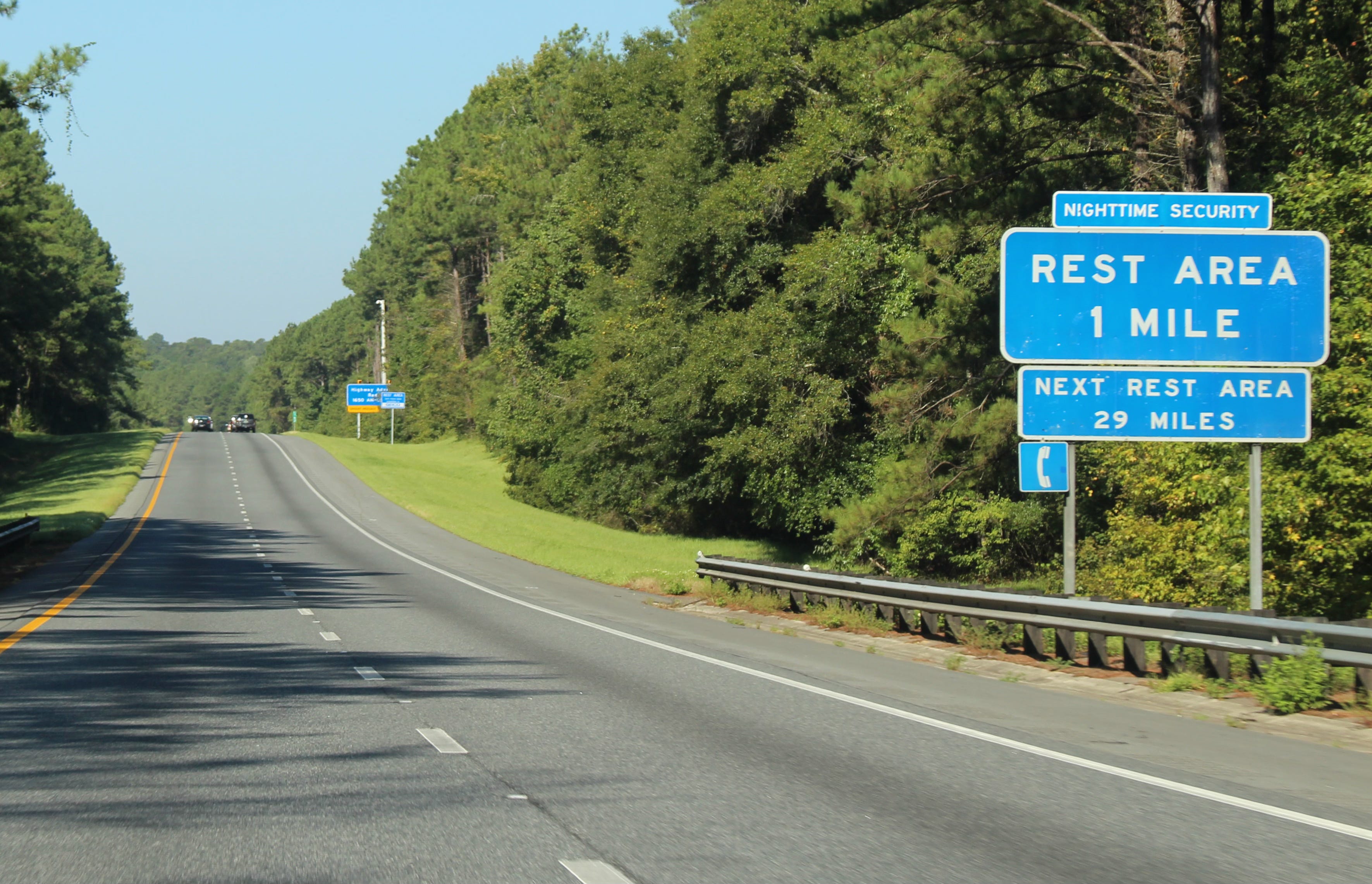

Secretary of Transportation Sean Duffy recently asked the American public for ideas on how to make traveling with a family easier. A lot of the crowdsourced suggestions were – it pains me to say it – not especially good. And many focused on airline-related practices, such as charging fees to choose seats, which directly raises costs for families with kids who need to be able to sit together.1 But improving the airport experience, while necessary and laudable, only touches the population that flies – in 2024, just about half of American adults flew in the past year (up from 25 percent in 1977), and families with young kids are less likely to fly than solo business executives.
My low-hanging fruit would be focused on families taking trips over the river and through the woods to Grandmother’s house, or National Parks, or wherever their summer vacations may be taking them. Interstate rest stops tend to be engineered for the long-haul trucker, with some showers and jerky in a vending machine. Some have designated “pet relief” areas, so Fido can be let out to do his business.
But very few in my personal experience seem to be built with kids in mind. Some decorative flowers here; a picnic table there. Setting aside funds to build some durable, kid-friendly play equipment would give families on a drive some blessed relief to look forward to. Everyone knows fenced-in playgrounds are as much a gift to parents, who can relax for a few minutes or plot out the best route around snarling traffic, as to the kids who directly enjoy them. (Shoutout to Parachute, Colorado, where the rest stop off I-70 demonstrates proof of concept.)
There’s approximately 2,000 rest stops off U.S. interstates, and a quick perusal of various industrial-size playground installations suggest you could ballpark maybe $60,000 a pop for modest-size play structures. Tariffs and rising wages might make that go up over time, but assume some savings from building modularly, get some cost savings through smart contracting and economies of scale, and it wouldn’t surprise me if you could make every interstate rest stop in America just that much more family-friendly for less than $100 million (funnily enough, the same amount the Biden-Harris administration earmarked for repairing nonfunctional EV charging stations, which serve a much smaller fraction of the population.)
Every once in a while some dreamy train idealist will post a fantastical map about high-speed rail traversing the continental United States. With sincere apologies to two-year-old boys everywhere, that will never happen. If you’re time-sensitive, we have planes, and if you feel like spending four days to get to Boston, Charleston, Dayton, Louisiana, Washington, Houston, Kingston, Texarkana, Monterey, Faraday, Santa Fe, or Tallapoosa you’re going to pack up the SUV or van, (if you’re Mitt Romney, you may strap your Irish setter on top), load up on snacks, and hit the open road. Improving road trips should be part of a pro-family agenda.
Making American road trips great again won’t be solved instanteously by more jungle gyms. Traffic jams are tough to tame, and building major infrastructure is expensive and takes time. But if family life is just as much about the journey as the destination, some light-tough sprucing-up can make the answer to “are we there yet???” go from a “no, stop asking” to a “well, we could pull over for a few minutes and let the kids blow off some steam.” It’s a relatively simple step to an America that signals that kids aren’t ancillary to public policy decisions, but at their core.
White House Happenings
The first hundred days of the second Trump administration has been a little bit like Forrest Gump’s proverbial box of chocolates – you never know what you’re going to get. Some actions have been stellar, some self-inflicted wounds. But three lower-profile efforts in the past week or so deserve a shout-out, demonstrating what a White House that takes both the fortunes of blue-collar workers and American believers seriously can achieve.
The first, “Preparing Americans for High-Paying Skilled Trade Jobs of the Future,” focuses on a workforce development agenda and directs Cabinet officials to produce a report reviewing and improving job training programs, including credentialing programs that offer alternatives to traditional four-year programs. It also calls for a plan to create one million new apprentices, expanding the registered apprenticeship program to new industries, and do a better job tracking outcomes. The same day, the President signed “Reinstating Common Sense School Discipline Policies,” rescinding the disparate-impact framework on school discipline policies and giving administrators more flexibility in meting out discipline without fear of running afoul of D.C. equity minders (a topic that the American Enterprise Institute’s Max Eden has spent years writing about.)
That was followed on Thursday by the creation of a domestic-focused Religious Liberty Commission, which will seek to ensure Americans enjoy the widest expression of their constitutional freedom of religion, protecting conscience rights, respecting parents' authority to raise their kids they way they deem best, and more. The commission features stalwart voices, like Rabbi Meir Solovichik, Bishop Robert Barron, and my boss, EPPC’s Ryan T. Anderson.
In D.C. policy circles, there’s been plenty of chatter about the downsides of the move-fast-and-break-things ethos that has dominated the first three months of Trump II. These announcements are a reminder that even when an executive order doesn’t merit a push notification, the Trump team is capable of setting forth a productive, even compelling, vision for the country – hopefully to be followed by laying out realistic plans to help us get there.
It’s Me, Hi
For Family Studies, I continue to push for targeted support for new families that celebrates the importance of supporting both mom and dad in the volatile months around when a baby is born:
“Providing all new parents some stability is especially appropriate for conservatives concerned about reducing abortions, rather than only giving benefits to married parents. But with control of Congress and the White House, the pro-family party should aim for policies that send an unmistakable signal that it’s better for moms and babies to have a committed, married father in the house around childbirth.”
In her coverage of the baby bonus conversation, Rachel Cohen links to my earlier piece on the topic for American Compass (Vox)
Parting Shots
“Deregulation” is no longer a dirty word — Hailey Gibbs, Allie Schneider, and Lauren Hogan have released a paper exploring where red tape could be cut in the child care sector for the Center for American Progress
Pro-life Members of Congress, including Rep. Chris Smith (R-N.J.) and twelve Republican Senators, sent a letter to the White House last month asking them to end federal funding for embryo-destructive stem cell research, which have not produced any therapeutic treatments despite decades of research, and to focus more federal research dollars on umbilical cord blood and adult and induced pluripotent stem cells, which have led to breakthrough treatments.
My EPPC colleagues Jamie Bryan Hall and Ryan Anderson released the first part of a bombshell report looking at complications from the use of the abortion-inducing drug mifepristone. They find much higher rates of adverse outcomes than has been widely understood, suggesting the need for much more careful study of the safety of these drugs and the impact that rapid expansion of access under the Obama and Biden administrations has had on women’s health
The U.S. now has its own version of the Cass Report – HHS has released a 400-plus page report reviewing the evidence base around treatments for pediatric gender dysphoria. Here’s an executive summary; and here’s a favorable review by writer (and fellow The Dispatch contributor) Jesse Singal
Lyman Stone of the Institute for Family Studies’ Pro-Natalism Initiative talked to NPR about how – and how not – to think about pro-natal efforts being discussed at the White House
“While it may be satisfying to dunk on conservatives, the left needs a better answer to the right’s pronatalism,” writes Capita’s Elliot Haspel (The New Republic)
“Democrats are slamming policy proposals the Trump administration is reportedly considering that aim to raise birth rates in the United States”, reports Grace Panetta (The 19th)
“I think the term pro-natalist is a little odd” - Rep. Blake Moore, the sponsor of the “Family First Act” isn’t alone in that sentiment. Though other anonymous Republican lawmakers tell Emily Brooks they think declining birth rates could be good for housing prices and besides, isn’t that something immigration can solve? (The Hill)
Alabama lawmakers are the next state considering including the “Success Sequence” in their state’s educational curriculum (Yellowhammer News)
Madeline Kearns files her report on NatalCon and the political valence of fertility (The Free Press)
Comments and criticism both welcome, albeit not quite equally; send me a postcard, drop me a line, and then sign up for more content and analysis from EPPC scholars.