

There Are No Children Here
In the 21st century, public housing programs should prioritize families
After 18 seasons, three Cy Young awards, one National League MVP award, and having become the 20th pitcher in MLB history to rack up 3,000 strikeouts, future Hall of Famer Clayton Kershaw makes his final start at Dodger Stadium tonight. See you in Valhalla. If it’s Friday, it’s Family Matters:
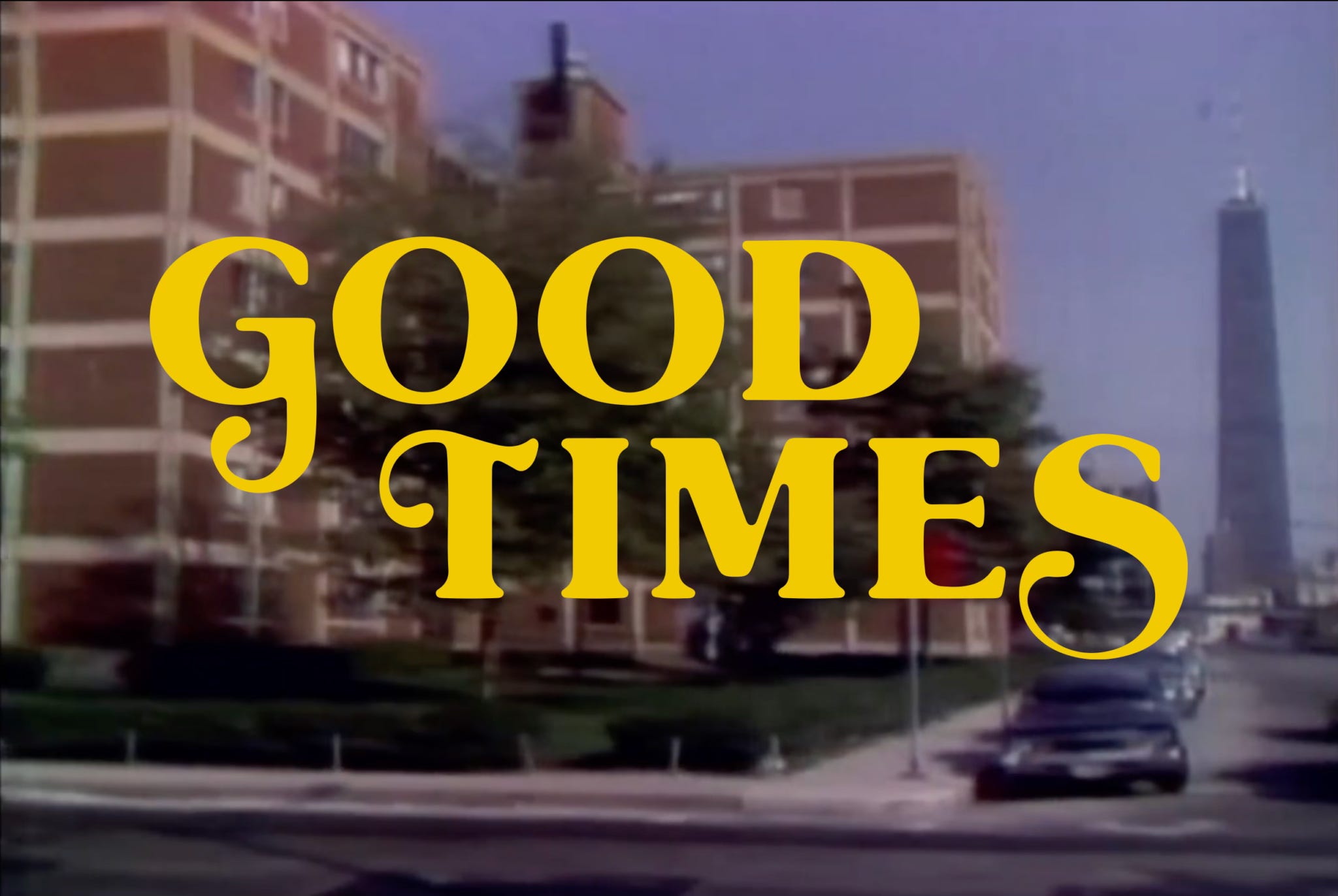
Good Times: The future of public housing
Housing Starts: Could we be in for some small wins?
Quote of the Week: Pope Leo XIV
Errata: Correcting the record
It’s Me, Hi: New York Times, Deseret News, Washington Examiner, Our Sunday Visitor, POLITICO
Parting Shots
Good Times
For decades, the phrase “public housing” stirred up mental images of the Robert Taylor Homes in Chicago, St. Louis’ Pruitt-Igoe, Techwood Homes in Atlanta, and other high-rise towers that quickly became synonymous with crime, disorder, and dysfunction. In his 2018 book, “High-Risers: Cabrini-Green and the Fate of American Public Housing,” author Ben Austen traces the history of one of the most infamous housing developments, which served as the backdrop of the Norman Lear-produced sitcom “Good Times” as shorthand for the problems plaguing inner-city Black families.
What Austen’s book aptly showcases is how public housing projects were initially created as a post-war benefit for the working-class, rather than the pockets of poverty they eventually became. Initially, as Austen details, the Chicago Housing Authority tried to screen residents at their various housing sites for their ability to be good neighbors — married, two-parent families with children and at least one worker were given precedence in the application process.1
“Very poor families, those who were unemployed, unstable, or unseemly—the new public housing wasn’t intended for them. The subsidy wasn’t charity or humanitarian assistance; the developments were supposed to revitalize the slums, not replicate them.”
Over time, however, push and pull dynamics changed the composition of public housing residents. White ethnics saw their economic fortunes rise in the post-War boom, and the suburbs attracted new residents who might have otherwise lived in downtown public housing. To help fill their spots, and to respond to political pressure that found the screening process too stringent against those with limited ability to pay, the bar for qualification was lowered and eventually eliminated. Working-class households who were expected to pay their full rent were gradually replaced by lower-income, often racial minority, more disadvantaged households whose limited ability to pay left holes in the housing authority’s budget. And the rising prevalence of racial frictions and poverty among the public housing population, in turn, led more whites to leave. Public housing went from favoring married couples to explicitly disincentivizing it. And, in the process, a benefit intended to stabilize the working-class and returning GIs became a safety-net for the poor, and the pathologies that would begin to mark public housing in the public consciousness began to take hold.
“There Are No Children Here: The Story of Two Boys Growing Up in the Other America” was a 1992 book by Alex Kotlowitz, a How The Other Half Lives-style biography of two boys who grew up in Chicago’s Henry Horner Homes, another troubled public housing development on the city's West Side. There were “no children” in the projects, one interviewee said, because they were forced to grow up too soon, confronted with drugs, dead bodies, and gangs as soon as they were old enough to walk to school. That book, along with high-profile crimes such as the killing of seven-year-old Dantrell Davis in Cabrini-Green that same year, helped spark a renewed emphasis on transforming public housing, and led to the eventual destruction of the “towers in the park” style of high-rise dwellings for more mixed-income developments. Vouchers largely replaced direct provision, and a greater awareness of the dangers of concentrated poverty led housing authorities to favor scattered-site, rather than high-rise, housing investments through programs such as HOPE VI.
Many, though not all, public housing residents benefited from the shift. Now, as Sarah Holder and Kriston Capps recently reported for Bloomberg, today’s understanding of public housing encompasses very different challenges. HUD Secretary Scott Turner has sought to use unleashing a housing boom been put to use during his stint, encouraging states to streamline permitting and building codes, touting Opportunity Zones and other vehicles for public-private housing partnerships, and putting a much-needed spotlight on ways to boost the supply of housing. “Out of intense complexities, intense simplicities emerge,” Bloomberg quotes him as saying. “In order to solve our housing shortage, we must build more housing stock. That’s the simplicity.”
That is certainly part of the story. Freeing up the housing market to fill the gap of millions of homes needed to end the shortage will take an all-of-government approach, and it is good for the HUD secretary to be an active cheerleader for those efforts. That effort at systemic reform will continue to be vital. But HUD’s traditional remit has been to provide assistance to those Americans whose incomes are generally too low to afford market rate housing, even if a construction boom lowers rents across the board.
But many low-income families will struggle to afford market-rate housing. Today, the bulk of federal assistance from HUD now comes in the form of tenant-based Housing Choice Vouchers, which they can take to a landlord and use to pay the rent — though only if the landlord is willing to take them. (There are about one million project-based public housing units nationwide, but virtually none have been built since 1983.) Roughly 9 million tenants benefit from HUD programs, but the share that have children present has been falling.
In 2011, 43 percent of households assisted by HUD were one-person households, with no children present. By 2021, that percentage had risen to 55 percent. Some of that reflects declining birth rates. But some also reflects the economics of housing, and public housing programs, which subtly shift the playing field in favor of smaller households and unattached renters over families with children present. To address that, here are some programmatic ideas that could boost the ability of HUD programs to support strong families and benefit low-income Americans:
Attack marriage penalties at ramming speed: Housing benefits, like Section 8 vouchers, are incredibly salient (unlike marriage penalties through the tax code). A cohabiting couple that knows they will lose their voucher if they get married faces a huge disincentive to tie the knot. Granting federal waivers for states to experiment with a “honeymoon period” (a set length of time for which the recipient is held harmless after marriage, regardless of income changes) or a second-earner set-aside (so that a new spouse’s income is heavily discounted for a period of a few years when calculating eligibility) could give more couples considering marriage the change to do so without expanding eligibility too far up the income ladder. These, and other experiments to remove barriers to marriage in housing programs, should be granted federal waivers in short order.
Leverage HUD-administered programs to create family-friendly housing stock: HUD plays a supportive role in building “affordable housing” by administering programs like the Community Development Block Grant and the HOME, and administering Rental Assistance Demonstration programs which taps private dollars to fund unit upgrades. While some changes would require an act of Congress, HUD could encourage states to give preference to units designated as officially “family-friendly.” Projects with specific design features, such as units designed for families rather than roommates, co-located child care centers, ground floor carseat and stroller storage, or requiring a certain mix of apartments (so a particular portion are required to be 2-bedrooms or more), or located within a certain radius of a school could be designated as family-friendly. HUD could encourage states to give additional points in their Qualified Allocation Plan score (which determine which projects get federal tax credits) to applications designated as family-friendly, or localities could give developers of these projects density bonuses (allowing to build higher or denser than they otherwise would be allowed to), fast-track permitting, or other incentives.
Give preference to families with young children: Housing Choice Vouchers have long waitlists — Experimenting with giving explicit preference to families with young children in voucher waitlists could be worth exploring. But recipients need to find landlords to take them. And another way to help families on HUD programs would be to prosecute cases of illegal housing discrimination. As Jerusalem Demsas recently wrote for The Argument, “Even though housing discrimination against families with children is technically illegal, the practice is still common and infrequently punished.” HUD’s fair housing programs have been hit hard by staff reductions, but landlords who refuse to rent to Section 8 recipients with kids should still know that what they’re doing is illegal. Another program that could be tweaked in a pro-family direction is HUD’s Section 32 Homeownership Program, which helps low-income renters transition towards buying their home — adjusting income parameters for households with dependents and smooth out marriage penalties could allow more recipients to be able to buy a home. And a bigger swing — that would require Congress to get involved, though it should — would be to adjust FHFA loan limits, mortgage rates or closing costs to give implicit subsidies to married families with dependents.
None of these, save perhaps the last, strike me as especially radical, but all require a commitment to seeing family formation as central to HUD’s goals.2 After decades of failure, the end of high-rise public housing was a bipartisan public policy initiative that responded to the challenges of the times and led to better outcomes for many (though not all) of the residents impacted. Now, our society facing a new set of challenges.
“There are no children here” may be our unofficial slogan not because our children are growing up too fast, but because we aren’t having children at all. Our public housing discussions are now less about high-rises and urban blight than the ungainly semi-public housing world of Fannie, Freddie, FHFA, and the rest (discussed in a previous Family Matters post). It will take political courage and experimentation to build pro-marriage, pro-child, and pro-family policy choices into our housing discussions — but such conversations are long overdue.
Housing Starts
While shutdowns and shoutdowns make Congressional headlines, there’s a possibility we may see some quiet legislative action on housing. Earlier this summer, Senators Tim Scott and Elizabeth Warren tag-teamed the “ROAD to Housing Act,” which offers some pro-housing goodies: Technical assistance to help localities improve and streamline their zoning codes; transit-friendly housing preferences; a Race to the Top-style competitive grant for housing supply growth; a CDBG pilot program that rewards housing production; removing legislative barriers to manufactured housing; faster NEPA reviews; eliminating some Section 8 regulatory burdens; lifting the RAD cap; a number of housing finance provisions; and more. (For a full synopsis, I point you to the Niskanen Center’s Alex Armlovich, Rohan Aras, and Andrew Justus. It’s not a home run ball, but it’s lots and lots of singles and doubles and would be the kind of bill that the current moment in housing affordability increasingly demands.
After an initial launch, the ROAD to Housing hit kind of a dead end. Now, the House has a more modest, but still bipartisan, housing bill that might help jumpstart conversations around housing affordability. The “Saving the American Dream Act” is much more modest, seeking only to create an interagency task force between HUD, the Department of Agriculture, the VA, the Treasury Department, and FHFA that would be tasked with producing a report on coordinating federal housing finance programs, lowering mortgage and construction costs, identifying regulatory barriers, and other factors pushing up the cost of housing.
One might fairly ask whether we really need another blue ribbon commission or report to examine the landscape of housing affordability in the U.S. Indeed, the ROAD to Housing Act answers many of the questions the interagency task force might be asking. But the House bill has support from key industry groups, like the National Association of Realtors, the National Association of Home Builders, Mortgage Bankers Association, and National Apartment Association, making it a much easier lift than the Scott-Warren bill, with various political and economic dynamics posing some challenges. If Congress is actually serious about the housing crisis, they’d seriously consider the Scott-Warren bill. If they want to be seen as serious about the housing crisis, they’ll favor the House bill.
Quote of the Week
It’s time for the Quote of the Week, a periodic Family Matters series featuring thoughts and sentences that are worth pondering! This week’s comes from Pope Leo XVI, speaking to Crux’s Elise Allen:
“Families need to be supported, what they call the traditional family. The family is father, mother, and children. I think that the role of the family in society, which has at times suffered in recent decades, once again has to be recognized, strengthened. I just wonder out loud if the question about polarization and how people treat one another doesn't also come from situations where people did not grow up in the context of a family where we learn – that's the first place you learn how to love one another, how to live with one another, how to tolerate one another, and how to form the bonds of communion. That's the family. If we take away that basic building block it becomes very difficult to learn that in other ways.”
It’s Me, Hi
I spoke to Caroline Kitchener of the New York Times on the impact that Charlie Kirk might have had in helping make marriage and family more appealing among young men on the right:
That kind of cultural shift “is more important than anything policy can do,” said Patrick Brown, a fellow at the conservative Ethics and Public Policy Center who focuses on policies that could help increase marriage and birth rates. Mr. Kirk, he added, “probably convinced more people about the benefits of marriage than I ever will in my life.”
And discussed Kirk’s shift from campus provocateur to leading conservative family man with Jennifer Graham of Deseret News:
“[O]nce he got married and had his kids…he was really focusing on the idea that politics isn’t the end-all and be-all as it is for so many other online provocateurs. He was trying to get to the heart of some of these cultural questions: how do we get people to take their religion seriously, to start a family, to have kids?”
I spoke to Mabinty Quarshie of the Washington Examiner about the macroeconomic trends making the Trump administration’s push for a second Golden Age more difficult, and what policies might help boost American families:
“Housing is, for most people, the biggest expense that they have. And so helping Republicans kind of encourage that…mindset of ‘let's build a lot more housing,’ I think that could actually be really useful to have come from the White House.”
I, along with Lyman Stone and Kody W. Cooper, spoke to Kimberley Heatherington of Our Sunday Visitor about the different strains of “pro-natalism” — and why some pro-family voices may not necessarily embrace the label:
“Silicon Valley money is sort of hacking reproduction in a way that is not just genuinely morally concerning … but ethically and socially and culturally pushing us in this sort of eugenic direction of optimizing what your child should look like, and picking the embryo that has the highest IQ score.”
And I spoke with Joanne Kenen, writing for POLITICO, about the potential political impact of the health care spending cuts included in the “One, Big, Beautiful Bill:”
“I think the gamble the Republicans are taking is [voters] are not going to associate [rising health costs] with us, right?”
Errata
Let the record state that, in what I presume was an editing error, the Post and Courier recently attributed to me a sentiment that I do not believe — and that my on-the-record quotes elsewhere in the article plainly bely. Charlie Kirk was decidedly not promoting the mentality of Andrew Tate, and in fact was offering a much-needed counterpoint.
Lastly, there was some confusion in the wake of last week’s Family Matters that I should clear up (the fault is all mine!). New Mexico’s child care assistance is nominally now universal, which means any family can apply for a voucher, and the state has no wait list. But the simple act of receiving a voucher does not mean a family is guaranteed a slot — families must still compete in the market for an open slot. As the Santa Fe New Mexican reported, “New Mexico has made lackluster progress in increasing the capacity of child care statewide, declining 3% in the number of slots between the fall of 2019 and spring of 2023.” Over the same period of time, the number of families at or below the federal poverty level who received child care assistance from the state declined. And, as NPR Marketplace alluded to, the expansion is simply not that large in numerical terms, given than nearly 90% of New Mexico families were already previously eligible under the prior threshold. So families are still competing for a limited number of spots — they just won’t pay anything out of pocket if they hit it big. Everybody clear?
Parting Shots
Republican Iowa Rep. Ashley Hinson has re-introduced legislation to amend the Family and Medical Leave Act (FMLA) to provide family leave and a child tax credit to parents who suffer miscarriages and stillbirths
Texas lawmakers are considering a plan to allow Education Savings Accounts to pay for private child care or Pre-K programs (Fort Worth Star-Telegram)
A new paper from Erkmen G. Aslim, Wei Fu, Caitlin K. Myers, Erdal Tekin and Bingjin Xue suggests that Texas' restriction on abortions led to more births, which they suggest increased metrics of economic hardship and income inequality (NBER Working Paper No. 34245)
Catholic Charities USA is hiring for a director of policy, research, and analysis.
Republicans and Democrats say they hope the Kirk assassination spurs a change in how people use social media, reports Helen Huiskes (NOTUS)
To help reduce the spate of youth injuries, Major League Baseball is implementing a “dead period” for scouting high school and college baseball players (ESPN)
Restorative reproductive medicine continues to draw eyeballs on Capitol Hill, with a recent briefing on the topic attracting a packed house. More coverage from NBC News’ Aria Bendix.
Emma Waters of the Heritage Foundation joined Live Action’s Sami Parker for an interview about how IVF, commercial surrogacy, and eugenic embryo screening are leading to a culture of “consumer eugenics”
Another week, another must-read from Chloe Sladden, this one on how privacy-obsessed households are contributing to a tragedy of the commons (parents who used to be able to easily form connections with other parents now have a harder time). “It comes down to a question of values: should we prioritize privacy for a small percentage of parents? Or community for everyone else?”:

Comments and criticism both welcome, albeit not quite equally; send me a postcard, drop me a line, and then sign up for more content and analysis from EPPC scholars.
There was, we should note, explicit racial segregation, too — at least until an “accidental integration” led to the breaching of the color barrier in public housing, leading to riots and backlash.
One interesting thought experiment could be to ponder what public housing high-rises might have looked like if they remained committed to screening for upwardly-aspirational, married families. It would have become a very different (that is not to say better, but different) program, aimed at subsidizing the working- and middle-class, rather than providing a no-frills lifeline for the near-destitute.